Off the Meter
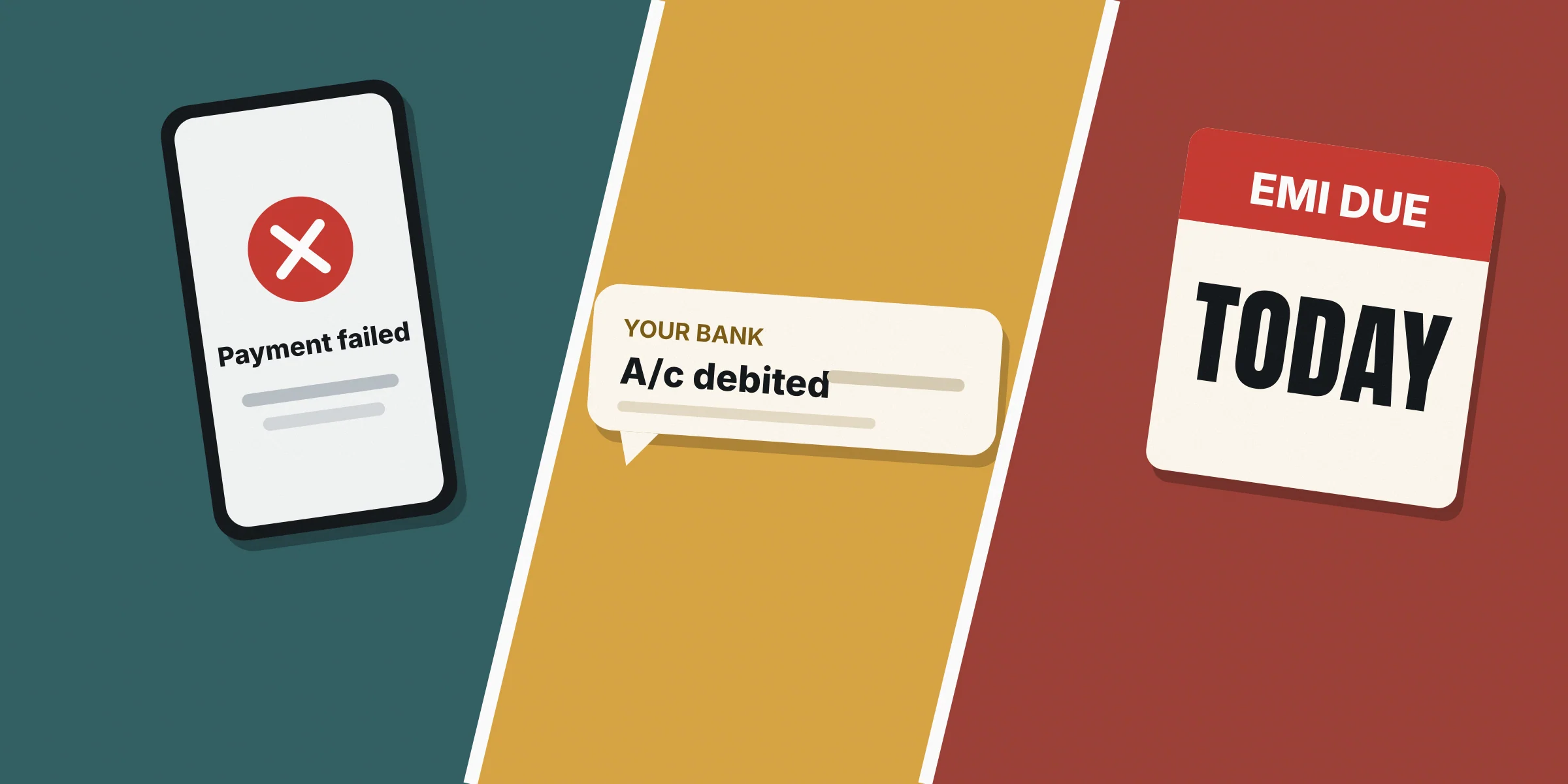
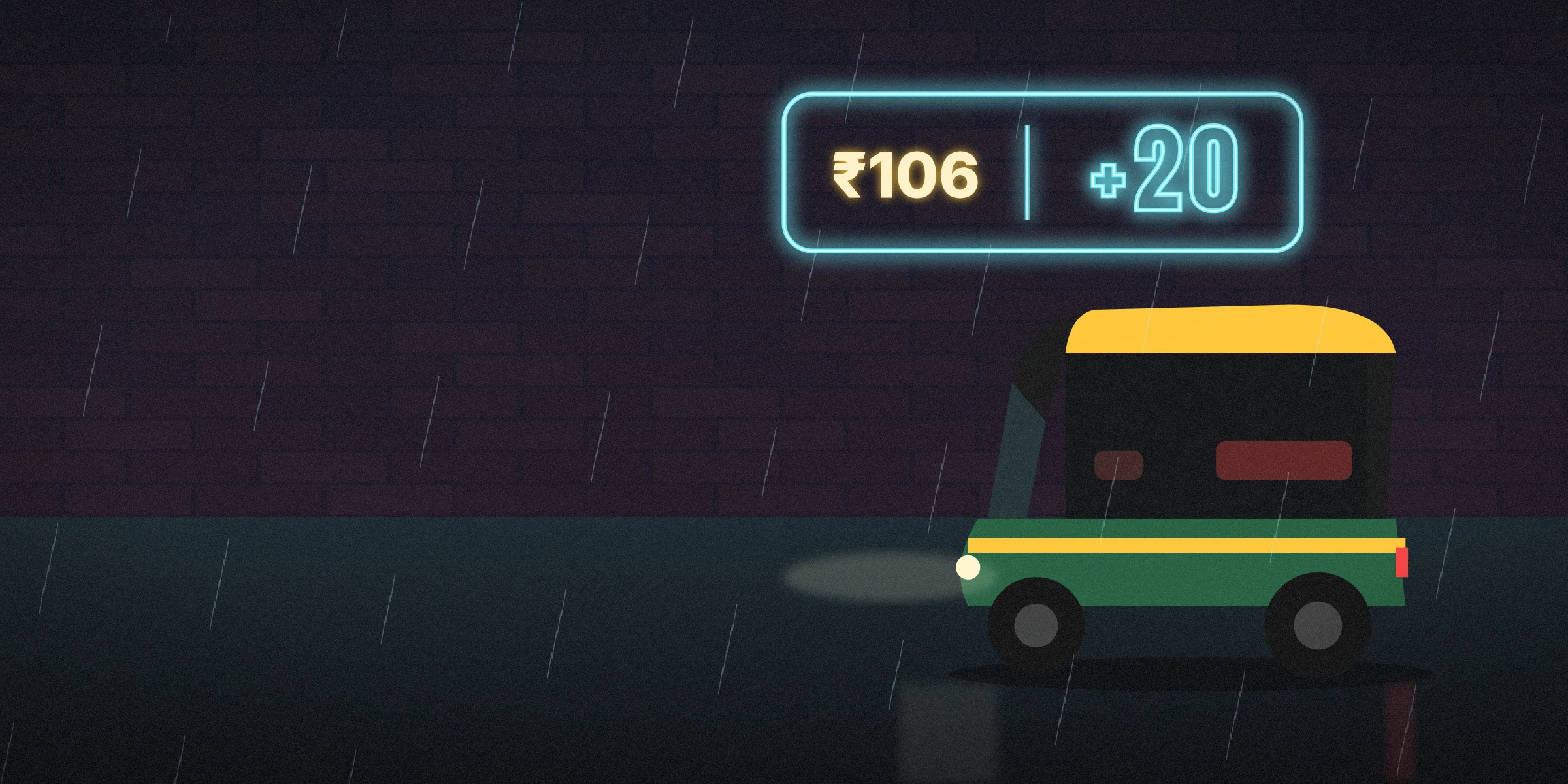
A ₹106 auto ride turns into a request for another ₹20 or a cancellation. I looked at why these negotiations happen and what a better in-app arrangement could look like for both riders and drivers.
The project at a glance
- Problem
- Riders and drivers can end up negotiating fare differences outside the booking experience.
- Approach
- Examine the incentives and practical constraints faced by both sides of the transaction.
- Proposed solution
- Explore a better in-app arrangement for handling the situation.
- Work produced
- Product case study and proposed experience.
- Key trade-off
- Treating riders and drivers as one problem, including a grace ride that costs the platform some fee revenue but removes the driver's reason to take the ride off the app.
- Status
- Independent product concept. Not shipped.
Three rides
Community discussion
In Aug 2026, a rider took a ₹106 Rapido auto from a DMart. After the ride started, the driver asked for ₹20 more because of their two bags, and when questioned said, "If you don’t want to pay ₹20, cancel the ride." The rider paid, complained, and Rapido credited ₹40 to their wallet. In the comments, the rider was clear that the problem was how it was demanded, "not the ₹20 itself".
Around the same time, a rider in Mumbai needed to get from Mira Bhayandar to the airport at around 2 to 3 in the morning. They describe Uber Auto drivers accepting the ride and then simply not moving towards the pickup. They booked Uber Go instead. After the ride started, the driver asked them to cancel and pay him the same ₹460 directly, explaining that he pays a ₹400 subscription for every three rides. The rider said no, then agreed once the driver showed them the subscription screen.
In November, a Rapido rider described being asked to cancel because the margin was not enough for the captain. At the destination, the captain asked for more money and got aggressive when they refused. Their conclusion was in capitals: "YOU WON’T BE ABLE TO COMPLAIN ONCE YOU ARE OUT OF THE SYSTEM."
That is three independent posts from three people, about two companies, in three months. I also saw posts about a forced cancellation on Uber and a driver turning abusive after a rider cancelled on Ola, but I only read those as titles, so I am not leaning on them.
How much to trust this, and the other side
The Rapido post had 1,204 upvotes in a subreddit of about 2,000 members, so it clearly travelled well beyond its own community, and the count says more about how relatable the story is than about how often it happens. Three posts are a pattern worth investigating, not a frequency.
The thread is also not one-sided, which is the most useful thing about it. One commenter says "Rapido isn't for luggage" and that luggage charges need mutual understanding. Another argues that buses charge for luggage too. And the rider himself said he would happily pay "a reasonable official charge" if one applied and was clearly communicated.
What is actually broken
I think this is three problems that look like one.
The fare does not know about load. A supermarket run with bags and an airport run with suitcases are priced like an empty-handed trip, so the only tool a driver has for pricing the difference is to renegotiate after the ride has started.
The driver's fee model can make an off-app ride the rational choice. The Mumbai driver described a subscription that runs out every three rides. A self-identified Rapido captain in another thread said he had asked riders to cancel a few times, only when he forgot to buy his subscription and the per-ride commission would cost more. I have not verified these plan terms with the companies, so treat them as what drivers say. But drivers act on what they believe, not on the fine print.
The rider loses every protection the moment the trip is cancelled: no trip record, no live tracking, no in-app safety tools and no complaint path. That is exactly the point the third rider made.
This is where I part ways with the tone of the comments, a lot of which is about driver attitude. Some drivers behave badly, and the aggression in these stories is not acceptable. But the system creates the moment. When the honest route costs the driver money and the dishonest one saves it, the dishonest one becomes normal, and the rider pays for it in risk.
The redesign
Before the ride: declare luggage
Booking asks one optional question: carrying anything? The answers are none, a few bags, or large luggage. Large luggage adds a fixed, published surcharge to the quoted fare, and the driver sees the declaration before accepting. Nobody has to argue about two DMart bags, because a few bags costs nothing extra.
During the ride: request a fare change, not pay or cancel
If the luggage was not declared, the driver can send an in-app fare change request with a reason, capped at the published surcharge. The rider accepts or declines in the app. Declining does not end the ride; it sends the disagreement to support with both sides on record. The negotiation still happens, but it happens inside the product, with limits.
For the rider: report without cancelling
The live ride screen gets a "Driver asked me for extra money or to cancel" option that files a report without ending the trip, so tracking and safety tools stay on. If a rider tries to cancel after the trip has started, the app warns them plainly that tracking, safety features and support end with the trip.
For the driver: no penalty for staying honest
If a driver's subscription runs out partway through a shift, let them complete the ride they are on and settle the fee afterwards, instead of making that ride cost more on the app than off it. This is the fix that touches driver economics, and it is the hardest one to justify on a spreadsheet. It is also the only one that removes the incentive rather than policing it.
Moment | Today | Proposed |
|---|---|---|
Booking | Fare ignores luggage | Optional declaration, published surcharge for large luggage |
Mid-ride dispute | Pay or cancel, verbally | Capped fare change request, accepted or declined in the app |
Rider asked to cancel | Cancel and lose protection, or argue | Report without cancelling, warning before cancelling a live trip |
Driver's plan runs out | Off-app ride is cheaper for the driver | Finish the current ride, settle afterwards |
Trade-offs
A luggage surcharge raises prices for some riders, and some will under-declare to avoid it. The cap on fare change requests limits how much that can be exploited in either direction.
Fare change requests could become routine upselling. Capping the amount, limiting frequency and watching acceptance rates per driver would show quickly if that is happening.
Grace rides cost the platform fee revenue. Off-app rides cost the whole fare, plus the safety exposure and the brand damage of stories like these.
A warning before cancelling a live trip can read as blaming the rider. The copy needs testing with real riders, not just a product team.
Proposed metrics
These are proposed metrics for a pilot in one city. None of them are results.
Proposed metric | Why it matters |
|---|---|
Reports of being asked to pay extra or cancel, per 1,000 completed rides | The primary outcome |
Cancellations after the trip has started | A proxy for rides moving off the app |
Fare change requests: rate, acceptance and dispute share | Whether the channel is used fairly |
Driver acceptance rate for rides with declared luggage | Guardrail: the declaration should not make bookings harder to fill |
Driver earnings per online hour | Guardrail: the fix should not quietly move the cost onto drivers |
What I'd validate next
These are the questions I'd want answered before treating the proposal as ready to build.
Do riders declare luggage honestly when a declaration can add a surcharge?
Do capped fare change requests stay occasional, or turn into routine upselling?
Does reporting without cancelling reduce the number of rides that move off the app?
Does the warning before cancelling a live trip come across as helpful, or as blaming the rider?
Do drivers accept rides with declared luggage as readily as other rides?
Would a grace ride change what drivers do when their subscription runs out?
Sources
"Pay ₹20 extra or cancel the ride", r/RapidoUsers, Aug 2026
Ola Uber and Rapido Problems, r/mumbai, Aug 2026
Never take a ride on Rapido if the Captain is saying cancel your ride, I will drop you, Nov 2026